AI Comic Videos for YouTube Shorts: How to Get Started
A good story can capture attention in seconds. The challenge is turning that story into a short, engaging video without spending hours creating illustrations, editing scenes, and preparing content for upload.
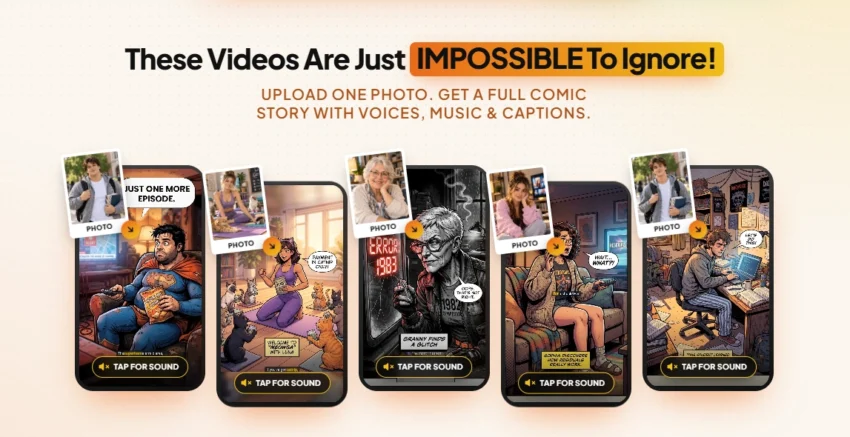
That is why AI comic videos for YouTube Shorts are becoming an interesting option for creators who want to experiment with visual storytelling. Instead of appearing on camera, you can build a video around characters, comic-style scenes, narration, and a clear story.
For example, you could turn a funny everyday situation into a short comic, create a fantasy adventure, or explain an interesting fact through illustrated scenes. The key is to give viewers a reason to keep watching until the end.
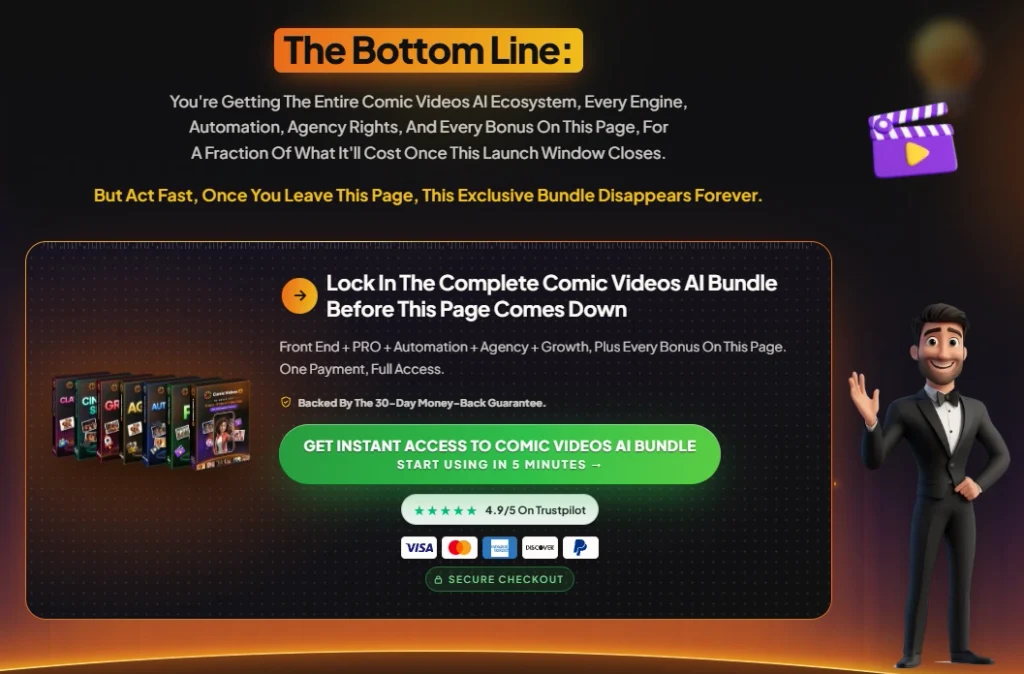
Tools such as the Comic Videos AI Bundle may be worth investigating if comic-style content fits your channel. However, a software purchase alone will not make a video engaging. The story, pacing, visuals, and originality still matter.
In this guide, we will explore how to approach AI comic video creation, what to check before choosing a tool, the advantages and limitations of this format, and how to decide whether Comic Videos AI is suitable for your YouTube Shorts workflow.
Quick Product Overview
| Detail | Information |
|---|---|
| Product | Comic Videos AI Bundle |
| Category | AI video creation tools |
| Intended use | Comic-style video and storytelling content |
| Potential audience | YouTube Shorts creators, faceless channels, storytellers, and marketers |
| Main benefit to investigate | Whether it simplifies your comic video production workflow |
| Pricing | Check the current official offer |
| Skill level | Depends on the software’s actual workflow and available features |
The table provides a starting point, not a guarantee of specific software capabilities. Review the current product description to confirm the features included in your chosen package.
What Are AI Comic Videos for YouTube Shorts?
AI comic videos combine illustrated characters, story scenes, and video editing to present a short narrative. Depending on the workflow, creators may use AI tools to help generate scripts, visuals, narration, captions, or other production elements.
The result can look like an animated comic book, a moving graphic novel, or a sequence of illustrated scenes with voice-over.
Here are three ideas you could explore:
- Funny stories: Show a relatable situation with a surprising ending.
- Fantasy adventures: Build a short story around a hero, a mystery, or an imaginary world.
- Educational comics: Explain a historical event, science fact, or everyday lesson through visual storytelling.
You do not need to use every possible AI feature. A simple story with clear visuals and good pacing may be more effective than a complicated video filled with unnecessary effects.
Why Comic Videos Can Work Well for YouTube Shorts
Short-form video gives creators a way to test ideas without producing a long video every time.
Comic storytelling offers several creative advantages.
1. You Can Tell Stories Without Appearing on Camera
Faceless content is appealing to creators who prefer not to record themselves. Illustrated characters can become the visual focus instead.
This does not mean you can skip creative work. You still need a clear story, suitable visuals, and a recognizable style.
2. Visual Scenes Can Make Stories Easier to Follow
Imagine a 30-second story about a boy who discovers a mysterious box.
Instead of explaining everything with a long voice-over, you can show the boy finding the box, opening it, reacting to what is inside, and facing an unexpected consequence.
Each scene gives viewers something new to understand.
3. You Can Experiment With Different Niches
Comic-style videos can support many types of content, including humor, fictional adventures, educational explainers, and original characters.
However, choose a niche that you can develop consistently. A channel that publishes unrelated topics without a clear audience may struggle to build returning viewers.
How to Create AI Comic Videos for YouTube Shorts
You can start with a straightforward workflow, even if you are new to video creation.
Step 1: Choose One Simple Story Idea
Start with one central idea. Avoid trying to explain too much in a single Short.
For example:
Story idea: A boy finds a key in his garden and discovers that it opens a hidden door.
This gives you a clear beginning, a mystery, and a possible ending.
Step 2: Write a Short Script
Break the story into a few scenes. Each scene should move the story forward.
A simple structure is:
- Hook: Introduce a surprising situation.
- Development: Show the character investigating it.
- Twist: Reveal something unexpected.
- Ending: Deliver the payoff or leave viewers with a meaningful question.
Keep the narration natural. The viewer should understand what is happening without needing to read a large amount of text.
Step 3: Create Consistent Characters and Scenes
Use an illustration or image-generation workflow to develop your characters and backgrounds.
Try to keep the character’s clothing, appearance, and overall style consistent between scenes. Sudden changes can make the video feel disconnected.
Before publishing, check that the visuals match the story and do not contain unwanted text or strange details.
Step 4: Assemble the Video
Use a suitable video editor or a dedicated comic video creation tool to arrange the scenes.
Add narration, sound effects, captions, and transitions only when they improve the story. Keep the pacing lively without making the video difficult to follow.
If you are considering Comic Videos AI, confirm which of these steps it actually supports and how much editing you will still need to do yourself.
Step 5: Prepare the YouTube Shorts Format
For a typical Shorts workflow, a vertical 9:16 video is a useful starting point. Check YouTube’s current eligibility and upload requirements before publishing.
Make sure that:
- The main action is easy to see on a phone.
- Captions are readable.
- Important visual details are not hidden behind interface elements.
- The opening immediately introduces the story.
- The ending feels complete or gives viewers a natural reason to continue engaging.
Step 6: Review Before Uploading
Watch the finished video from beginning to end.
Check the spelling, narration, audio levels, scene transitions, and visual consistency. Also confirm that you have permission to use the music, sound effects, images, and other assets.
Comic Videos AI Bundle: What Should You Know?
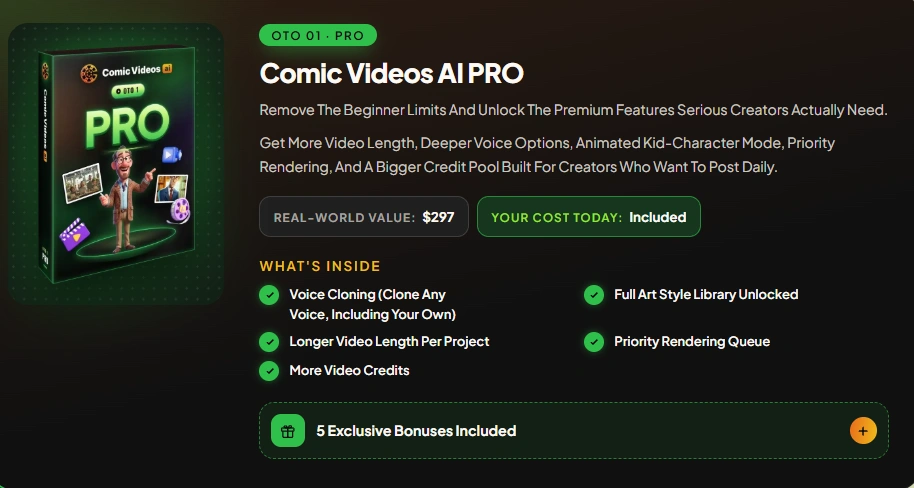
The Comic Videos AI Bundle is a product to investigate if you want a workflow focused on comic-style video creation.
Before buying, look beyond the promotional images and identify what the software actually provides.
Check the Main Features
Look for clear explanations or demonstrations of:
- How the software creates or assembles comic-style videos.
- Whether you can use your own scripts and creative ideas.
- What visual customization options are available.
- Whether voice-over and captions are supported.
- Which video formats and export settings are offered.
- Whether there are generation limits or additional usage costs.
Do not assume all these features are included just because they are common in AI video tools. Confirm each feature on the current official offer page.
Consider the Learning Curve
A tool may advertise a simple process, but your actual experience depends on the interface, available controls, and quality of its output.
If a demonstration is available, watch it before purchasing. Pay attention to how much manual editing is required to produce a finished video.
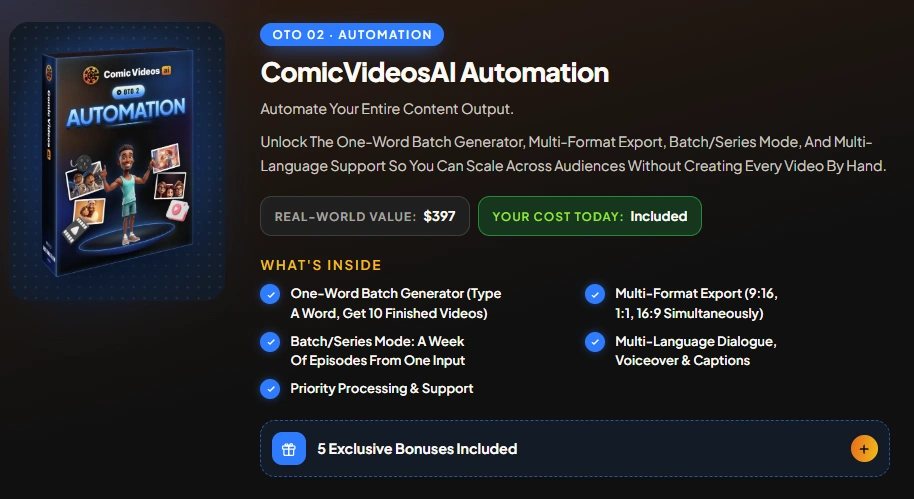
Understand the Bundle
A bundle may contain the main product and additional offers. More products do not automatically mean better value.
Review the included items, license terms, usage limits, and total price. If your only goal is to publish a few Shorts each week, you may not need every upgrade.
A Practical Example: A 30-Second Comic Short
Here is an example of how you could structure an original story.
Title: The Key That Opened Nothing
| Time | Scene | Narration |
|---|---|---|
| 0–4 seconds | A boy finds a strange key in his garden | “He found a key where no key should be.” |
| 4–10 seconds | He searches his house for a matching lock | “He tried every door, but none of them worked.” |
| 10–17 seconds | He notices a small door behind a bookshelf | “Then he heard a strange sound behind the wall.” |
| 17–24 seconds | The key opens the tiny door | “The key finally turned.” |
| 24–30 seconds | He sees another key waiting inside | “But why was there another key inside?” |
This is an original example script, not a demonstration of Comic Videos AI’s actual output.
You could create the visuals yourself or use tools that support your preferred illustration workflow. The important point is that every scene builds toward the final reveal.
Before publishing, make sure the finished video delivers the story promised by the opening.
Pros and Cons of AI Comic Video Creation
Pros
- Flexible storytelling: You can experiment with humor, fantasy, educational content, and original characters.
- Faceless production: You can create videos without filming yourself.
- Reusable creative ideas: A character or story concept can inspire future episodes.
- Visual variety: Comic panels and illustrated scenes provide alternatives to talking-head videos.
- Potential workflow savings: Suitable tools may reduce some manual production tasks.
Cons
- Quality varies: AI-generated visuals may contain inconsistencies or unwanted details.
- Editing is still important: You may need to correct scenes, timing, narration, and captions.
- Costs can add up: Software subscriptions, upgrades, credits, and other tools may increase your expenses.
- Originality takes effort: Repetitive stories and generic visuals can make a channel less distinctive.
- Monetization is not guaranteed: Using AI does not guarantee views, subscribers, or approval for YouTube monetization.
The best results usually come from combining useful tools with original ideas and careful editing.
Comic Videos AI vs. Other Ways to Create Shorts
Which production method should you choose? That depends on your budget, preferred style, and available time.
| Method | Advantages | Limitations | Best for |
|---|---|---|---|
| Comic Videos AI Bundle | May provide a workflow focused on comic-style content | Actual features, limits, and package contents must be verified | Creators who want a dedicated solution |
| General-purpose AI video tools | May support several different video styles | Comic storytelling may require extra setup | Creators making varied content |
| Image tools plus a video editor | Gives you more control over individual scenes | Requires you to manage multiple production steps | Creators who want customization |
| Manual illustration and editing | Offers detailed creative control | Can require significant time and skill | Artists and experienced editors |
There is no single best choice for every creator.
If convenience is your priority, investigate a dedicated workflow. If creative control matters most, separate tools may be a better fit.
Compare the finished output rather than relying only on promotional claims.
Who Should Consider Comic Videos AI?
Faceless YouTube Creators
If you want to build a channel around fictional stories or illustrated explainers, comic-style videos may fit your content plan.
Think about whether you can develop enough original ideas to keep the channel active over time.
Shorts and Reels Creators
Creators producing vertical videos may benefit from a repeatable production workflow. Check whether the software supports the formats you need and whether the exported videos require further editing.
Affiliate and Digital Marketers
Marketers may use illustrated stories to explain ideas, introduce products, or support campaigns.
Before using the output commercially, confirm the software license and the rights attached to any third-party assets.
Beginner Content Creators
Beginners may find it easier to start with short stories and a small set of scenes than to attempt complex animation immediately.
Choose tools that match your current skills and budget rather than buying a large package before you know what you need.
Who Should Avoid Buying Before Further Research?
You may want to wait if:
- You have not chosen a content niche.
- You need advanced animation controls that the product has not confirmed.
- The current price is outside your budget.
- The feature list or licensing terms are unclear.
- You expect the software to create a successful channel without additional creative work.
- You have not checked whether the output fits your preferred video format.
Research first, then decide whether the product solves a real problem for you.
Buying Guide: Is Comic Videos AI Worth It?
Before purchasing the bundle, ask yourself four questions.
Does It Fit Your Content Plan?
List the types of Shorts you intend to publish. If your channel will focus on comic stories, a comic-oriented workflow may be relevant.
If you mainly create screen recordings, product demonstrations, or live-action clips, a different tool may suit you better.
Will It Save Enough Time?
Estimate how long you currently spend writing, illustrating, editing, and preparing each video.
Compare that process with the workflow demonstrated by the software. Remember that reviewing and correcting AI-generated content still takes time.
Is the Price Reasonable?
Confirm the final checkout amount, whether payment is recurring, what is included, and whether optional upgrades cost extra.
Compare that total with alternatives you could use to produce similar videos.
Can You Use the Output as Intended?
Review commercial-use permissions and any restrictions that apply to generated content, uploaded assets, or client projects.
For YouTube, also consider originality, copyright, and the platform’s monetization policies. No AI video tool can guarantee audience growth or income.
Tips for Making Better AI Comic Shorts
The software is only one part of the process. These practical habits can help improve your content.
Start with a strong opening. Give viewers a mystery, a surprising image, or a question that the story will answer.
Keep each scene purposeful. Remove scenes that do not develop the story or improve understanding.
Use readable captions. Large, clear text is easier to follow on a mobile screen.
Develop a recognizable style. Consistent characters, colors, and storytelling can help viewers recognize your series.
Make the ending satisfying. Deliver the promised reveal instead of cutting the story off simply to encourage comments.
Review audience feedback. Watch retention and engagement patterns to understand which ideas resonate with your viewers. Use those insights to improve future videos rather than assuming one format will always work.
Respect copyright. Use original stories, appropriately licensed assets, and music you are allowed to publish.
Frequently Asked Questions
1. How do I make AI comic videos for YouTube Shorts?
Start with a short original script, divide it into scenes, create matching illustrations, assemble the scenes in a suitable editor, and add narration or captions if needed. Export in a format that meets YouTube’s current Shorts requirements.
2. Do I need animation skills to create comic Shorts?
Not necessarily. You can start with illustrated scenes and simple transitions. However, you may still need to learn basic editing, timing, and caption placement to produce a polished result.
3. Can Comic Videos AI create YouTube Shorts automatically?
Check the current product demonstration and feature list. Confirm which steps are automated and which require manual input or editing. Do not assume that every part of production is automatic.
4. Can I monetize AI comic videos on YouTube?
Potentially, if your content meets YouTube’s eligibility and monetization policies. Original storytelling and meaningful creative input matter. AI use alone does not guarantee monetization approval or earnings.
5. Are AI comic videos good for faceless channels?
They can be one option for faceless channels, especially those built around original stories, illustrated explainers, or fictional characters. Success depends on the quality and originality of the content, not simply the format.
6. Is Comic Videos AI suitable for beginners?
It may be suitable, depending on its actual interface and workflow. Watch a demonstration and confirm the required skills, output controls, and limitations before purchasing.
7. Can I use AI comic videos on Facebook Reels as well?
You may be able to publish suitable videos on Facebook Reels, provided they meet the platform’s current technical requirements and policies. Confirm the export format and ensure you have the necessary rights to all content.
8. What should I check before buying Comic Videos AI Bundle?
Review the current price, exact features, bundle contents, usage limits, export options, commercial license, and refund policy. Compare the product with alternatives before deciding.
Final Verdict: Should You Use AI Comic Videos for YouTube Shorts?
AI comic videos offer a creative way to tell short stories without relying on live-action filming. With a clear script, consistent visuals, and careful editing, you can turn a simple idea into a comic-style Short that viewers can follow from beginning to end.
The Comic Videos AI Bundle may be worth investigating if its confirmed features match your production needs. However, do not purchase based only on promotional promises. Check the live offer, understand what is included, and decide whether the workflow fits your budget.
If you are new to content creation, start with one simple story and learn what your audience enjoys. Build your process gradually, improve your videos with feedback, and focus on originality rather than publishing large amounts of repetitive content.
Ready to explore the product? Review the official Comic Videos AI Bundle offer and verify the current features, pricing, and terms before making your decision.